Food to fabric
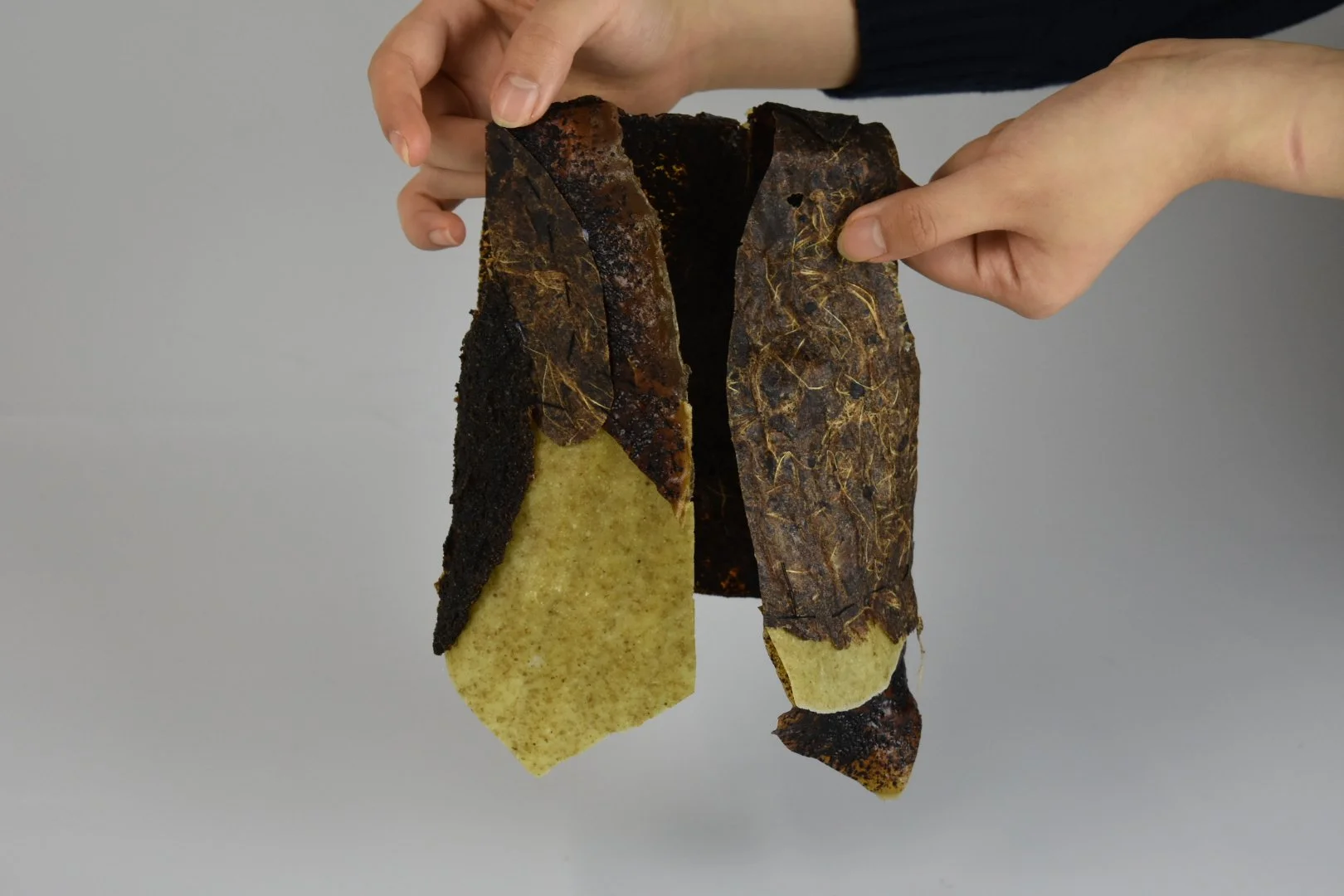
Transforming Food Waste into wearable materials
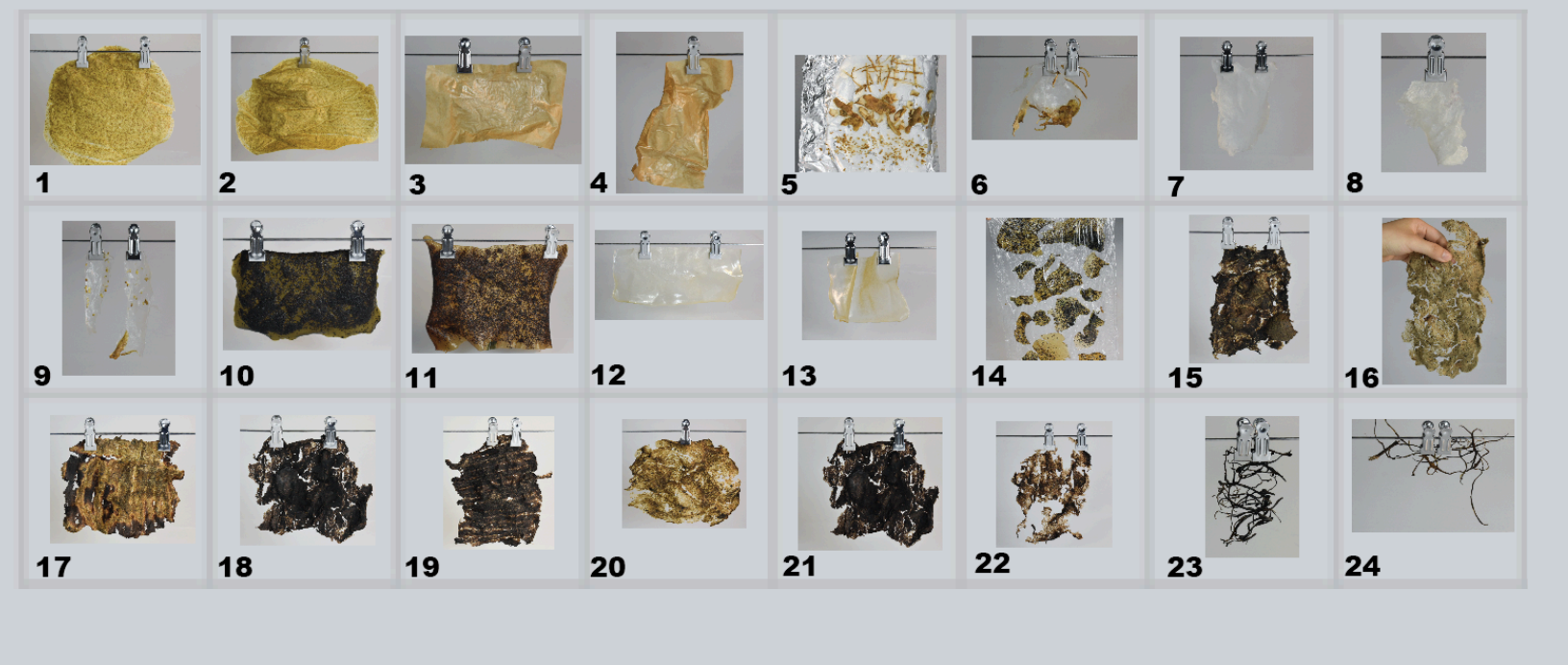
This project explored how household food waste can become a valuable resource for future fashion. Using a research-through-design approach, I created a wearable material library that tests and develops textiles made from discarded food, challenging traditional ideas of what clothing can be made from.
Through material experimentation, prototyping, and the exploration of both food and non-food processes, the project investigates how waste can be reworked into functional and expressive materials. Guided by human-centred research, user insights shaped the direction of the prototypes and highlighted how alternative materials can shift perceptions around sustainability.
By combining food with fashion, this project encourages a new perspective on consumption showing how reducing waste and rethinking materials can inspire more circular and responsible design practices.
Role/ Product / Material Designer
Duration/ 7 Months
01 . Exploration
The project began with an open exploration of sustainable material alternatives, using
hands-on methods such as knitting, weaving, stretching, and tactile testing and visiting the Dutch Design Week to understand the strengths and limitations of both natural and edible materials. This process raised key questions about durability, binding, and structural integrity, guiding further experimentation.
Natural fibers especially locally sourced wool yarn proved essential for creating strength and flexibility, successfully merging with unconventional materials like corn leaves. While some edible materials were unsuitable, household food waste showed strong potential. Experiments with strawberries, agar-agar, and gelatin mixtures resulted in flexible, leather-like samples.
02 . Ideate
Insights from the initial material exploration led to a clear opportunity: transforming everyday household food waste into new material possibilities. By tracking which purchased and consumed foods most often ended up as waste, three promising directions emerged, banana peels (left photo) for their fibrous qualities, potato skins (middle photo) for their starch content, and coffee grounds (right photo) for their textural potential.
These materials became the focus for ideation. Each was explored separately within the team, and we exchanged samples to compare properties, discuss outcomes, and identify patterns. By adjusting material ratios, introducing new additives, and testing different environmental conditions such as temperature, we observed how each waste material behaved and how it could evolve into a viable textile.
03 . Reflecting
The testing phase was essential in narrowing the design direction and understanding how small adjustments shaped material performance. Experiments with glycerol, water content, and temperature revealed how easily the balance could shift: too little glycerol produced stiff, brittle fabrics, while too much reduced sewability; incorrect water ratios either weakened the structure or caused components like coffee grounds to separate. Temperature also proved critical, as high heat melted agar–coffee mixtures and low temperatures slowed formation or encouraged mold, while mid-range conditions produced the most stable results.
By comparing softness, strength, toughness, and antibacterial qualities across all samples, we identified the most promising formulations for each waste material. These insights provided a clear foundation for continued development and more focused design decisions.
04 . Redesign
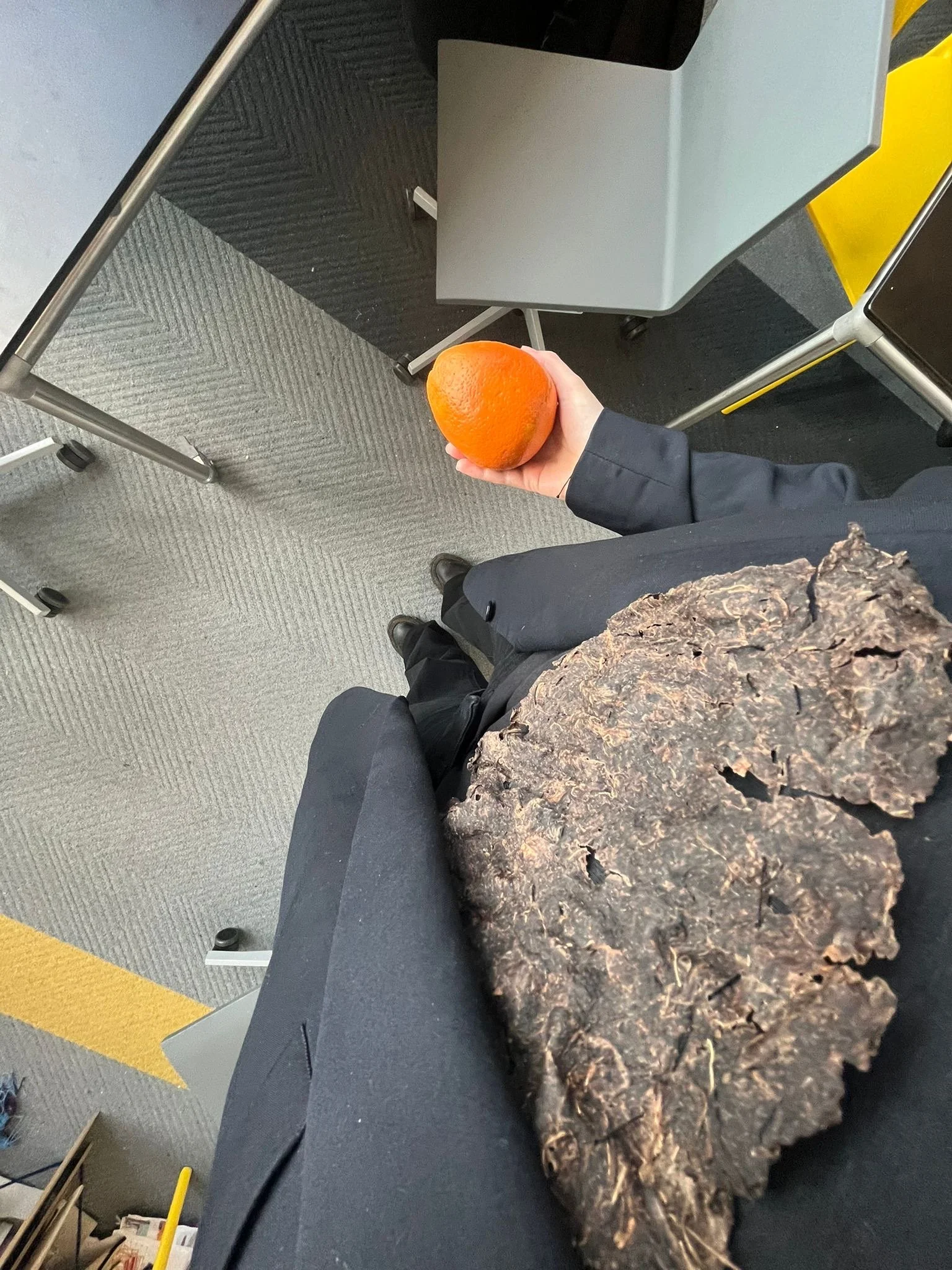
In the redesign phase, we moved from material development to understanding how these bio-materials behave on the body. To test this, I redeveloped the most promising samples banana peel, potato skin, and coffee grounds and integrated them into black cotton T-shirts, replacing small sections so the materials touched the skin directly.
We wore the shirts for a full day and documented the experience every hour in a shared WhatsApp group as a dairy study. This first-person testing revealed insights we couldn’t get in the studio: the coffee-ground fabric released a calming scent and felt cool and leather-like; the banana-peel fabric was structured but slightly brittle; and the potato-skin fabric was soft and visually appealing but lacked durability, eventually tearing.
These wear tests helped us refine the materials and understand how they perform in real environments, shaping the next steps in their redevelopment.
5 . Redesign
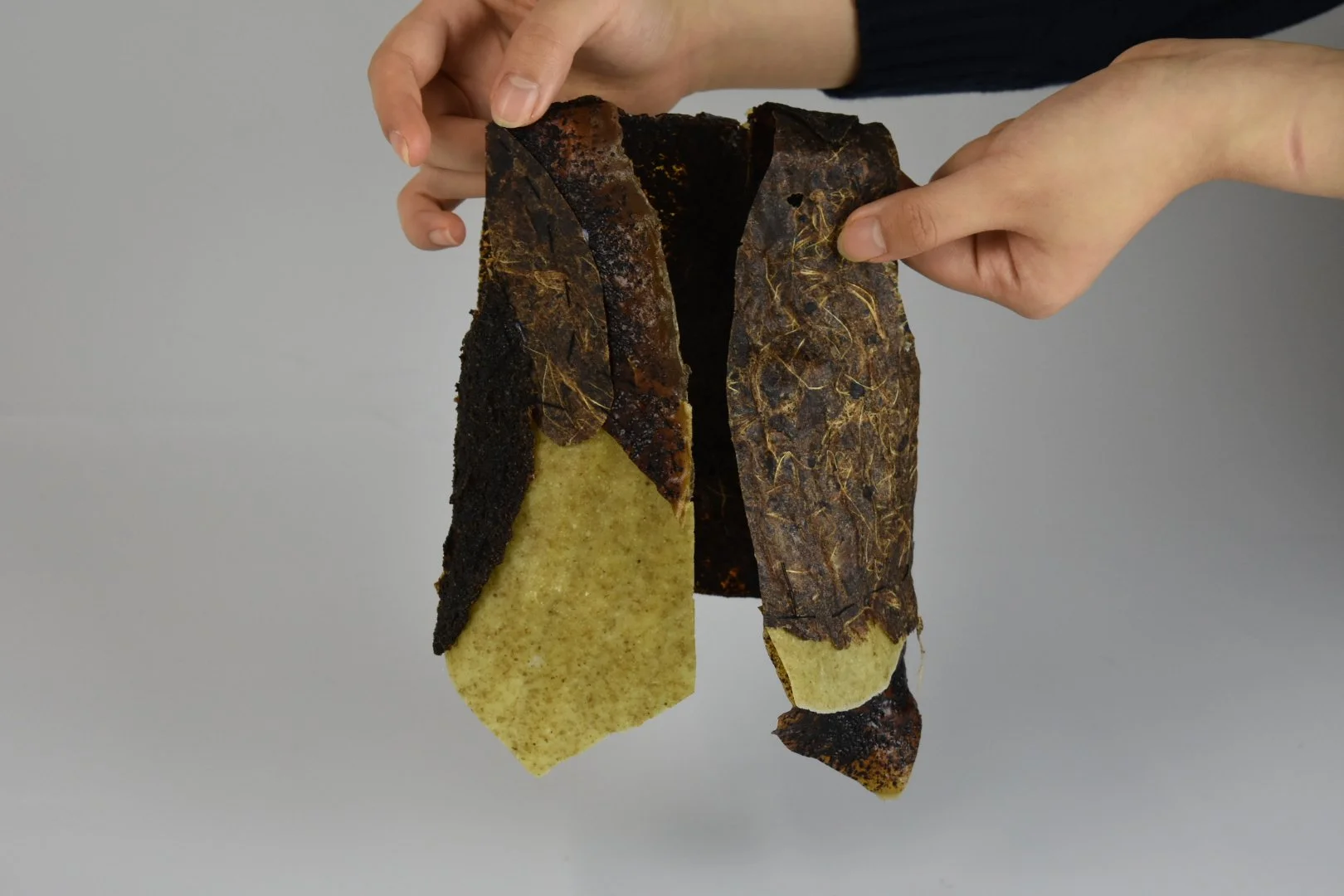
For the final design, we focused on showcasing the unique qualities of our food waste materials banana peel, potato skin, and coffee grounds. Each offered distinct properties: the resilience of banana peel, the flexibility of potato skin, and the aromatic, textured qualities of coffee grounds. Our design decisions centered on bonding and combining these materials to create a visually striking, functional garment that reflected our first-person design perspective.
The result was a mini vest (see photo), inviting participants to touch, feel, and experience the materials firsthand. Through this wearable, we aimed to spark curiosity, raise awareness about food waste, and inspire new thinking about materials and sustainability in fashion. The project demonstrates how discarded resources can be transformed into innovative textiles, reshaping our relationship with clothing and material use.
06 . Evaluation
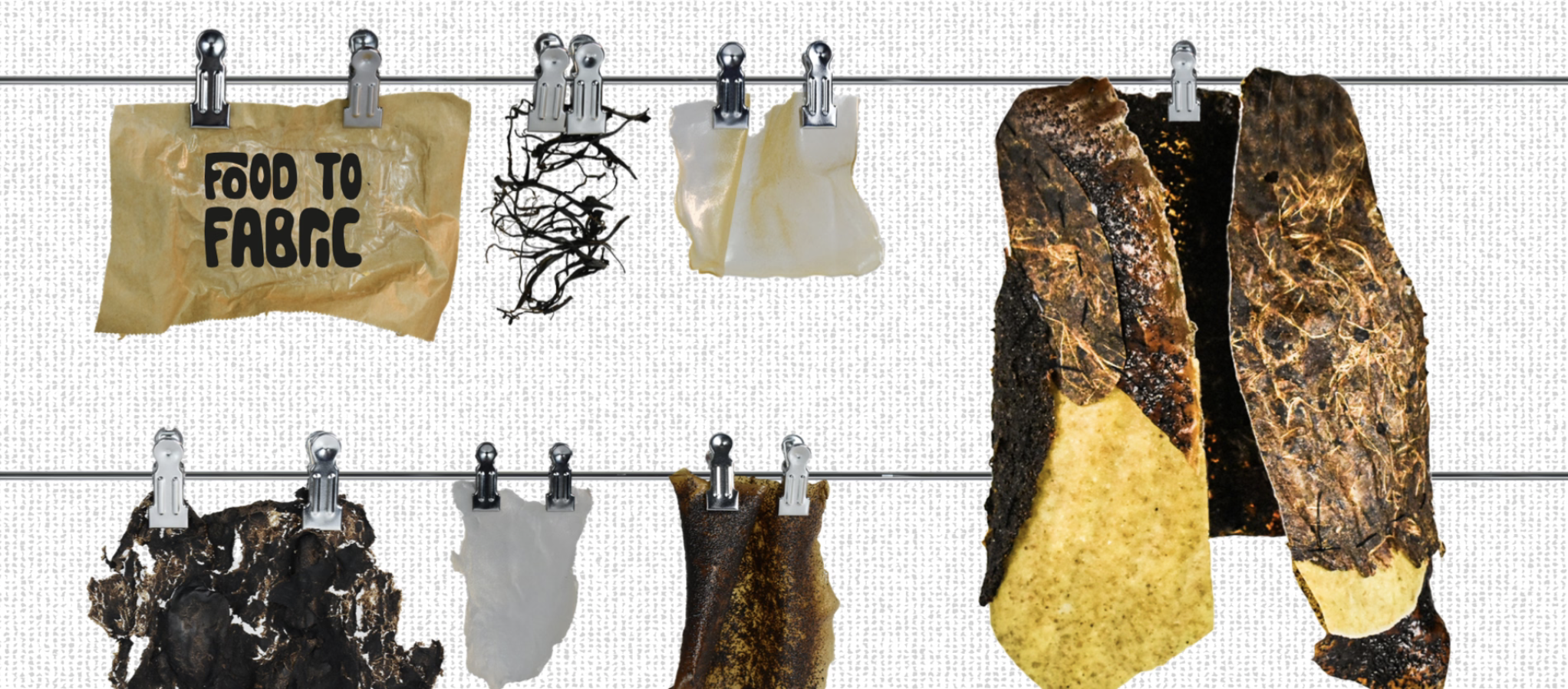
This project successfully transformed food waste into wearable materials, challenging traditional fashion norms. By combining a first-person perspective with a Material-Driven Design (MDD) approach, we gained a deeper understanding of both the technical and experimental aspects of materials, as well as their emotional and sensory qualities. The vest became a tangible manifestation of this work, sparking curiosity and raising awareness about food waste in fashion.
Through the creation of a personal material archive, the project highlighted not only the potential of alternative materials for wearables but also the need to reconsider our relationship with clothing. Overall, it demonstrates the viability of sustainable fashion, encourages innovative material reuse, and invites reflection on how we can rethink both the materials we wear and the way we wear them.
Personally I became stronger in project management, material development, sustainability and exploring new approaches such as Material Driven Design and designing from a first person perspective.