Final Touch.
Enhancing the dining
experience through
tangile food design.
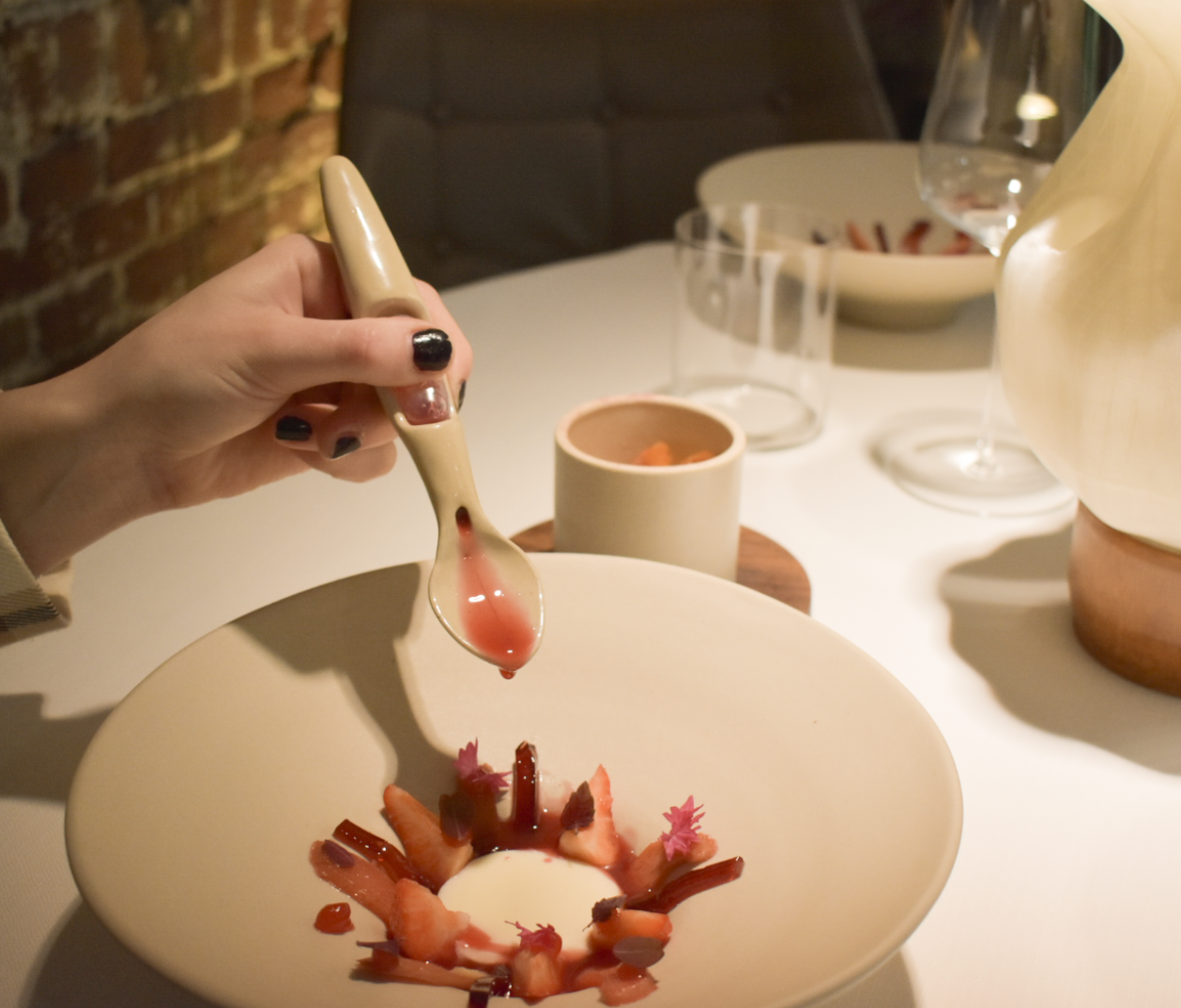
Final Touch is a Final Master project focused on enhancing the dining experience within a high-end gastronomic setting, developed in collaboration with the 2-star Michelin restaurant ‘De Treeswijkhoeve’.
In a fast-evolving culinary world, this project explores new possibilities from a User Experience Designers perspective in the fine dining by including a user-centred and material-driven approach. Through a non-linear process of exploration, inspiration, designing, testing, and refinement, the design seeks to not only enhance enjoyment but also deepen the connection between guests and their food.
De Treeswijkhoeve is known for its refined traditional and exclusive cuisine and welcomed the challenge to innovate without losing its essence. The result is Final Touch, a tangible food design concept inspired by the biomimicry aesthetics of the used ingredients and the restaurant’s natural forest surroundings. This elegant and organic addition creates a moment of surprise, stimulates the senses, and invites interaction, allowing guests to engage more deeply while dining. Final touch enriches the existing experience by visually and physically connecting diners with the story behind the dish.
Role/ Service, UX & Product Designer
Duration/ 2025, 7 Months
01 . Exploring
The goal of the exploration phase was to understand De Treeswijkhoeve’s identity, guest experience, and creative kitchen process to guide the project’s design direction.
My approach combined contextual research, on-site observation, and insights from staff. I examined the restaurant’s history and philosophy, highlighting how tradition, nature, and teamwork shape their two-Michelin-star experience. An in-depth analysis of the dining journey including atmosphere, service, storytelling, and tableware that helped uncover how they create a warm yet refined setting.
To understand dish development, I explored how the chefs work with seasonality, experimentation, and sensory testing in a collaborative process.
Key methods included literature research, observational analysis, experience mapping, and informal qualitative interviews. Together, these provided a clear and well-rounded understanding of De Treeswijkhoeve’s culinary world.
02 . Co-creating
To help De Treeswijkhoeve stay ahead in a rapidly evolving fine-dining market, the co-creation phase focused on exploring new directions to elevate the dining experience while preserving the restaurant’s core strengths. A participatory design session was chosen to involve key stakeholders including chefs, sommelier, host, and kitchen staff in generating ideas for a multi-sensory, farm-inspired guest journey.
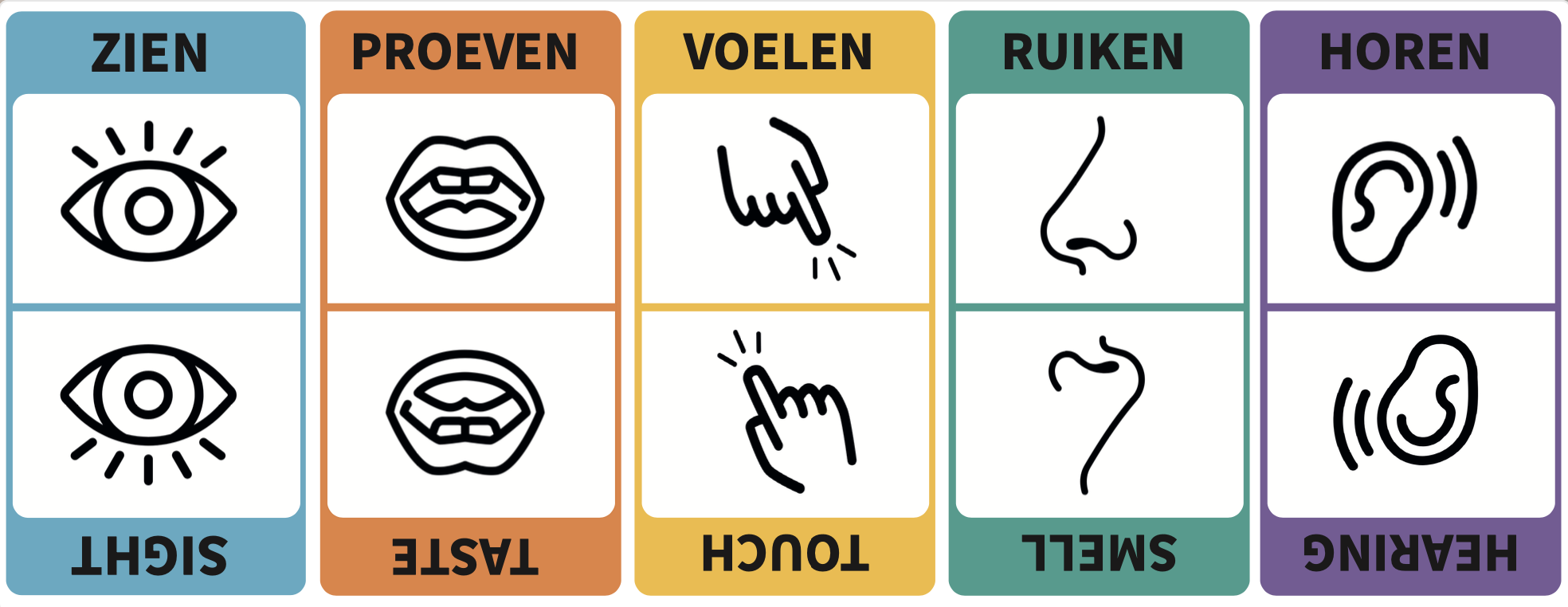
The session combined individual and collaborative exercises. Participants first reflected on memorable dining experiences, worked with inspiration and sense cards, and created initial dish or presentation ideas by linking sensory elements to the restaurant’s story and natural environment. They then generated surprise elements for the table and developed these further in small groups, creating quick prototypes across two iterative rounds.
Data from notes, photos, and recordings was thematically analysed. The session revealed clear opportunity areas: transparency, guest involvement, locality, sensory stimulation, connection to nature, and playful surprise. These insights provided defined directions for developing a tangible design element that enhances the restaurant’s seasonal, storytelling-driven dining experience.
03 . Ideate
The ideation began broadly, exploring summer ingredients, the chefs’ inspirations, and the restaurant’s natural surroundings. Early concepts drew from Chef Dick’s cycling routes and the restaurant’s own honey production, expressing the journey from plant to plate. These ideas were refined through weekly chef feedback and input from a graphic designer.
As the direction sharpened, the chefs defined a clear goal: enhancing the experience of their seasonal strawberry dessert. Sensory analysis of the dish led to concepts focused on interaction, multi-sensory engagement, and nature. A brainstorming session with industrial designers highlighted the importance of choosing one core element, resulting in a focus on redesigning the spoon and its presentation. The earlier flower-shaped lamp concept was revisited and became the preferred direction for further development.
04 . Reflecting
Prototypes were continuously tested with the chefs and staff to gather feedback on usability, emotional
impact, and feasibility, allowing me to refine and validate design decisions.
5 . Redesign
The redesign phase centred on creating an interactive spoon and presentation element to elevate the summer dessert experience. Inspired by the restaurant’s natural environment, biomimicry, and seasonal ingredients, early concepts integrated a pipette filled with tamarillo–shiso juice. Clay models and multiple 3D-printed prototypes helped refine scale, ergonomics, and integration of the pipette.
Parallel development of the flower-inspired holder revealed issues with stability and cleaning, leading to simpler, more organic shapes that better fit the restaurant context. Usability tests evaluated mouthfeel, grip, and pipette functionality, confirming comfort and ease of use while highlighting the need to reposition the pressure point for activation.
Full-scale foam prototypes of the lamp and spoon were reviewed with the chefs using interviews and an AttrakDiff evaluation. Their feedback was highly positive, emphasising narrative alignment and sensory engagement. Final sketches combined all insights into a compact, biomimetic design, which the chefs approved as the final direction.
06 . Evaluation
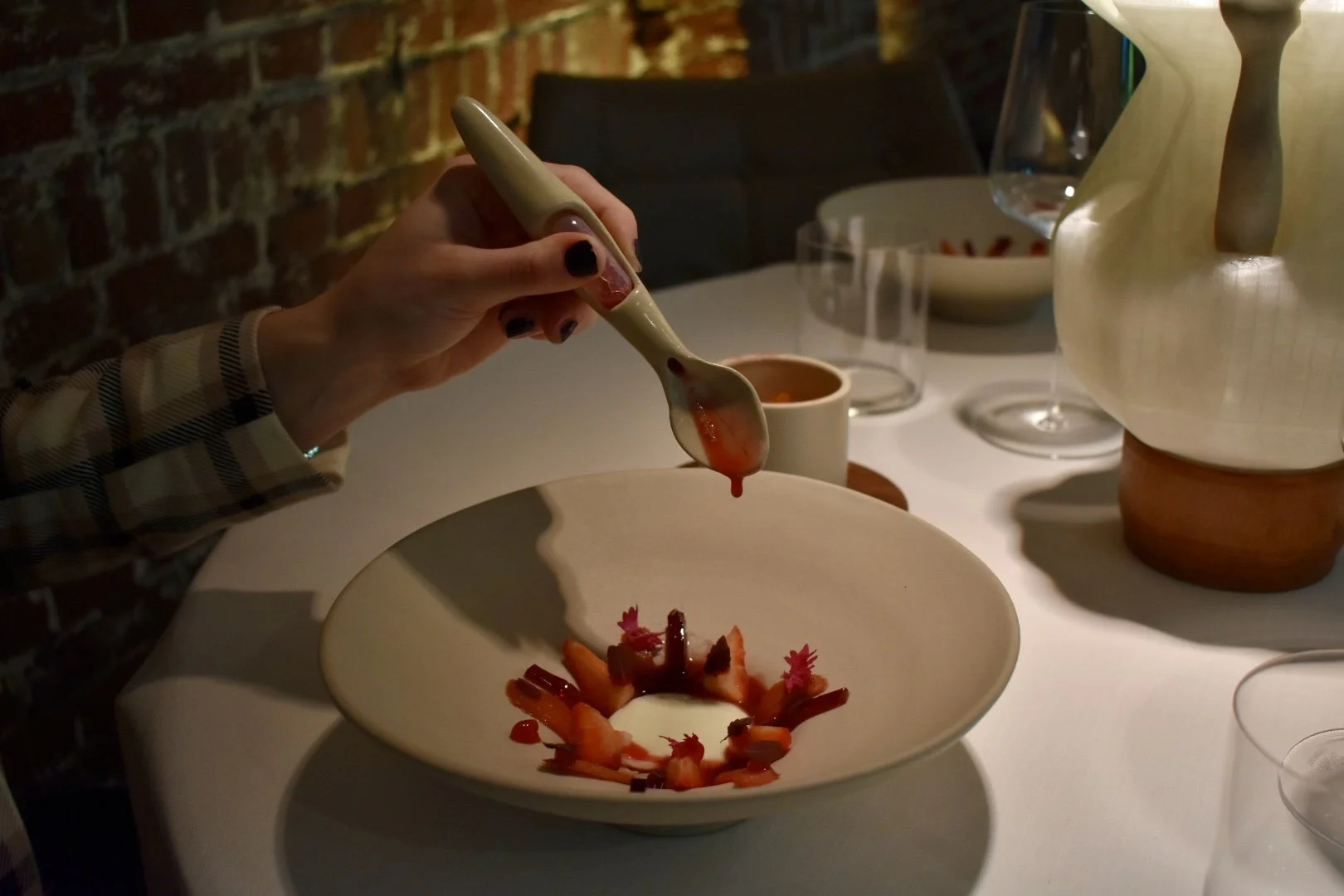
A final usability test in inquiry setting revealed the potential of the idea and having a positive effect on the dining experience and the supporting elements on the side.
This project included many skills, methods, expanded knowledge and personal development towards a professional, successful industrial designer specialized in UX, Product and Service design.
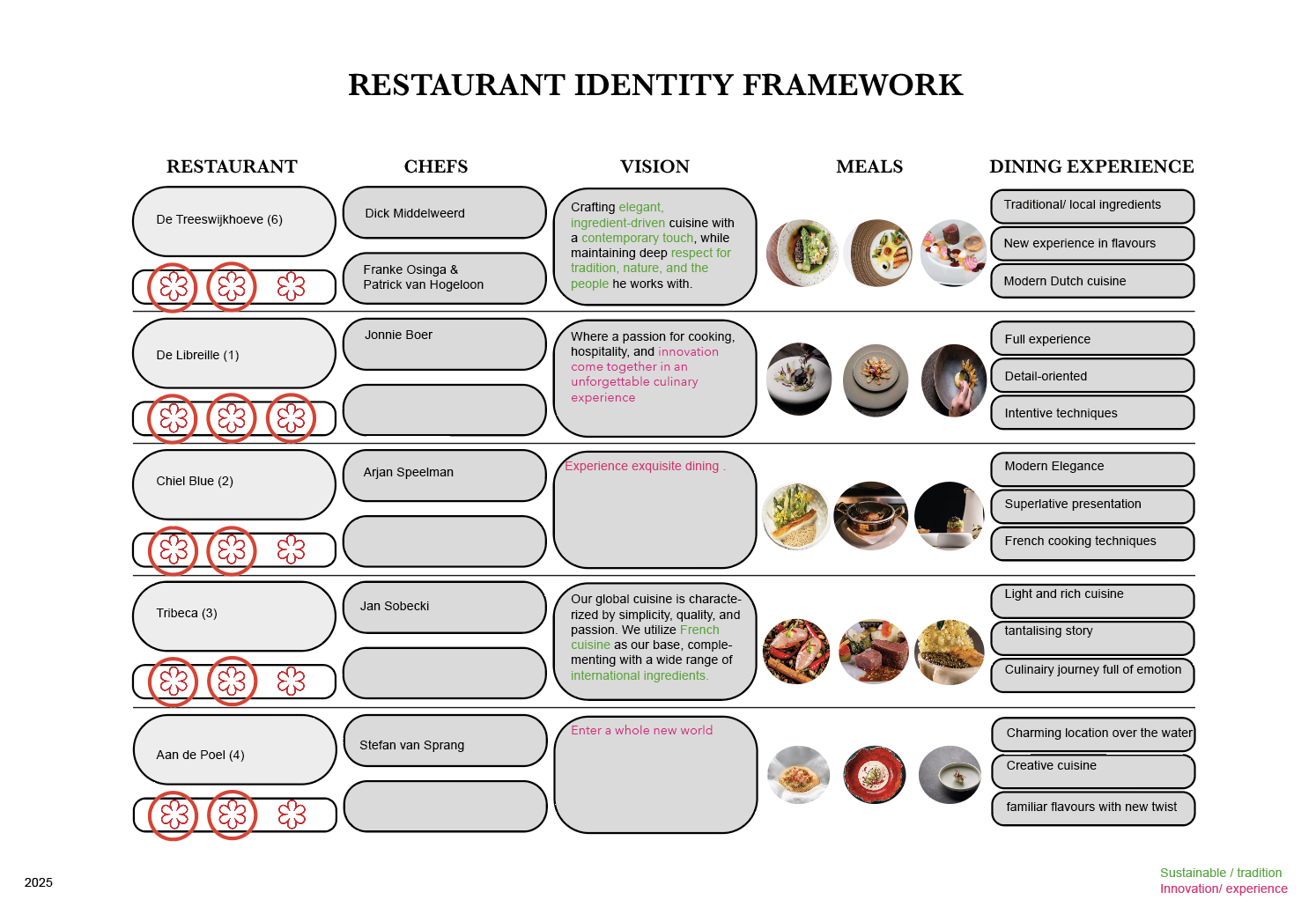
Developed method to summarize in-depht research
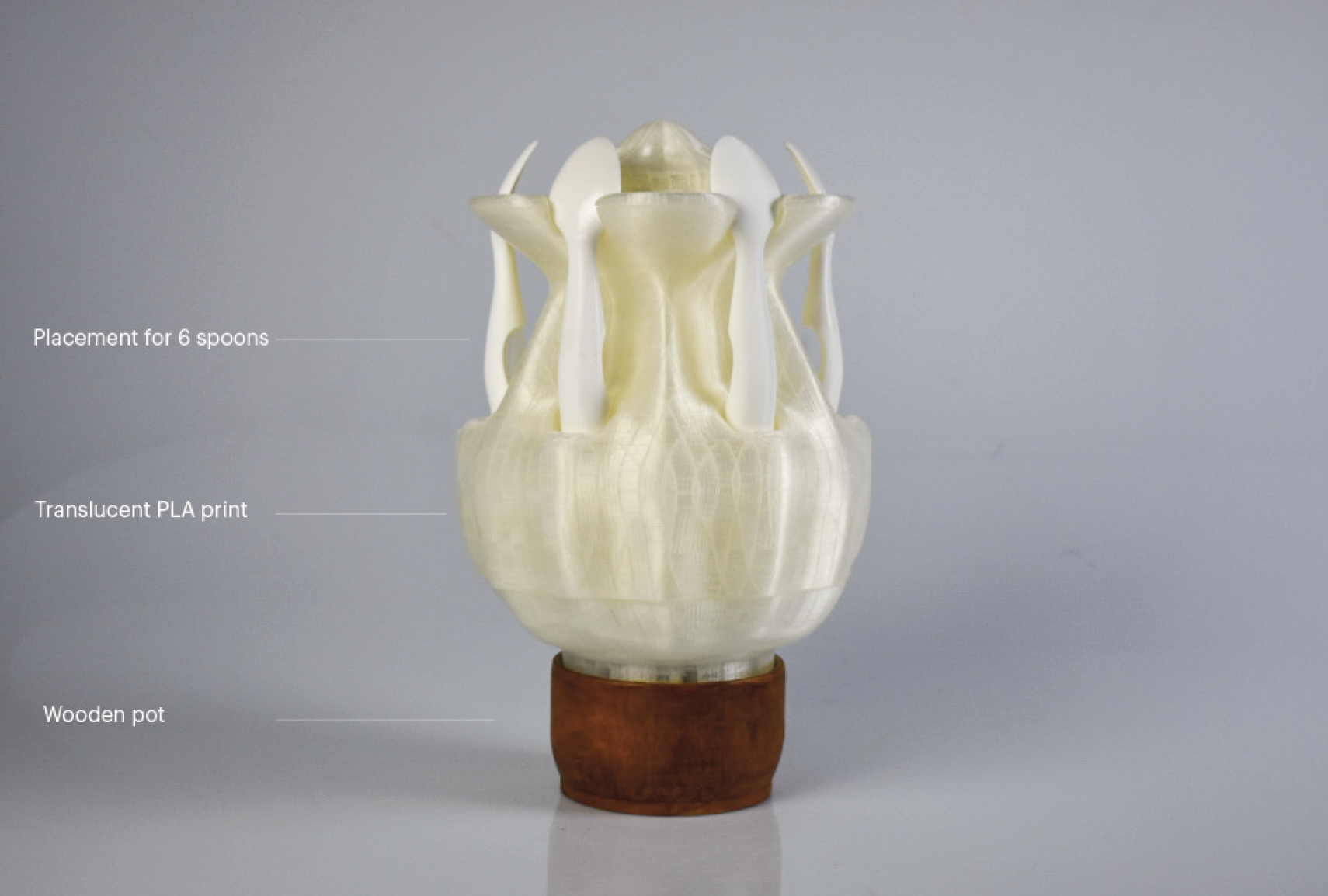
Elements on the outside of the lamp
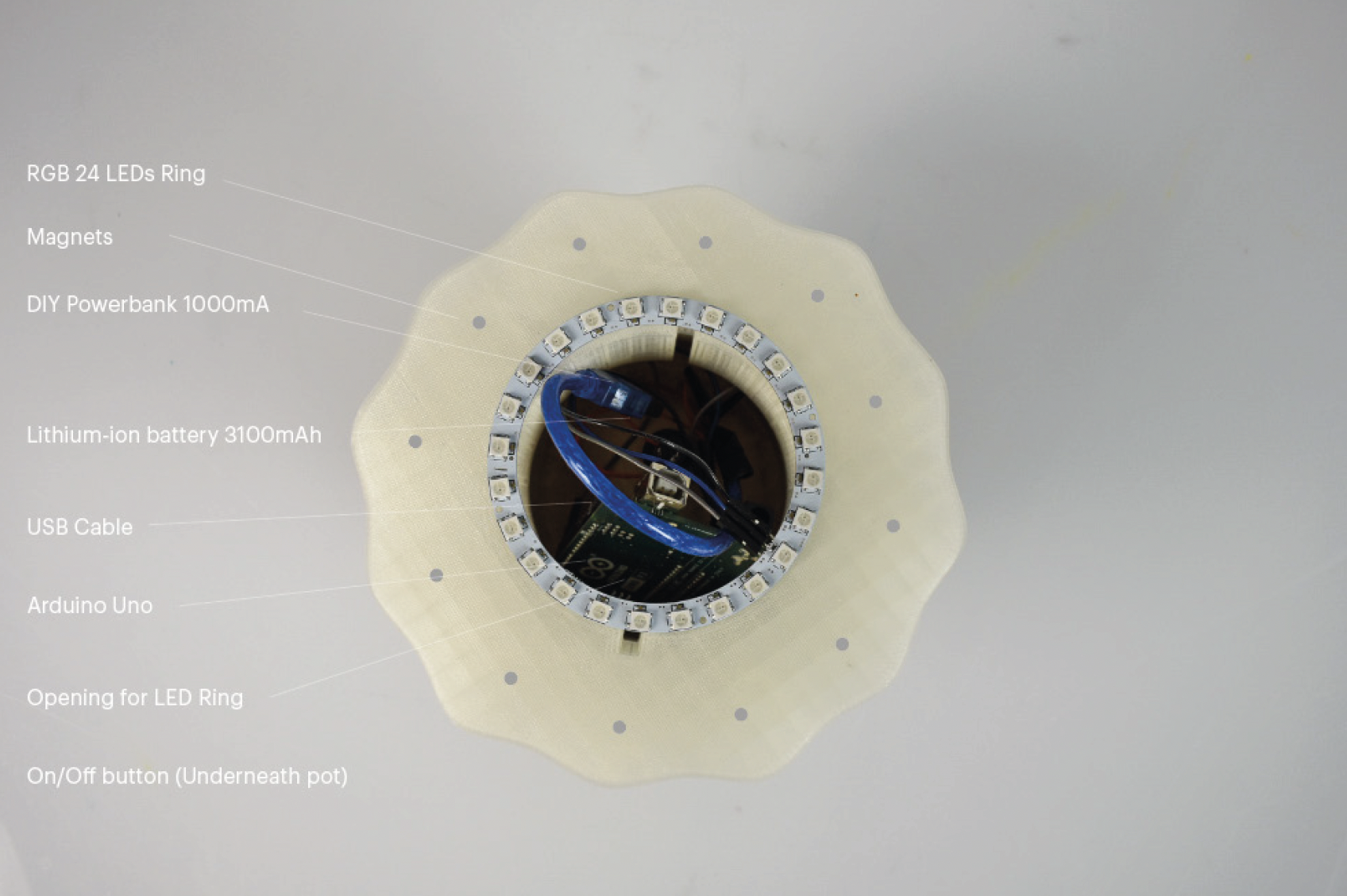
Elements on the inside lamp
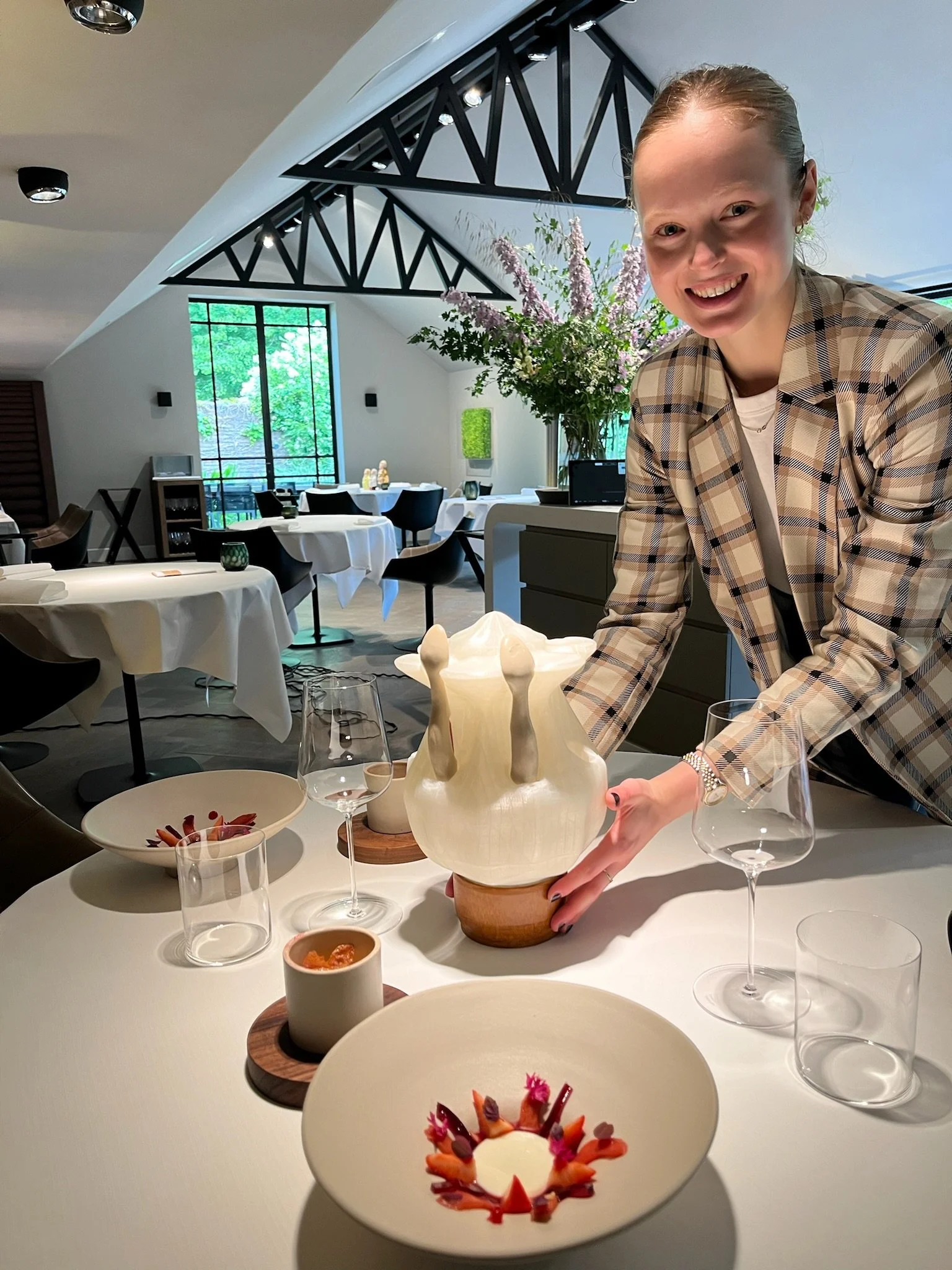
Full concept in Michelin restaurant
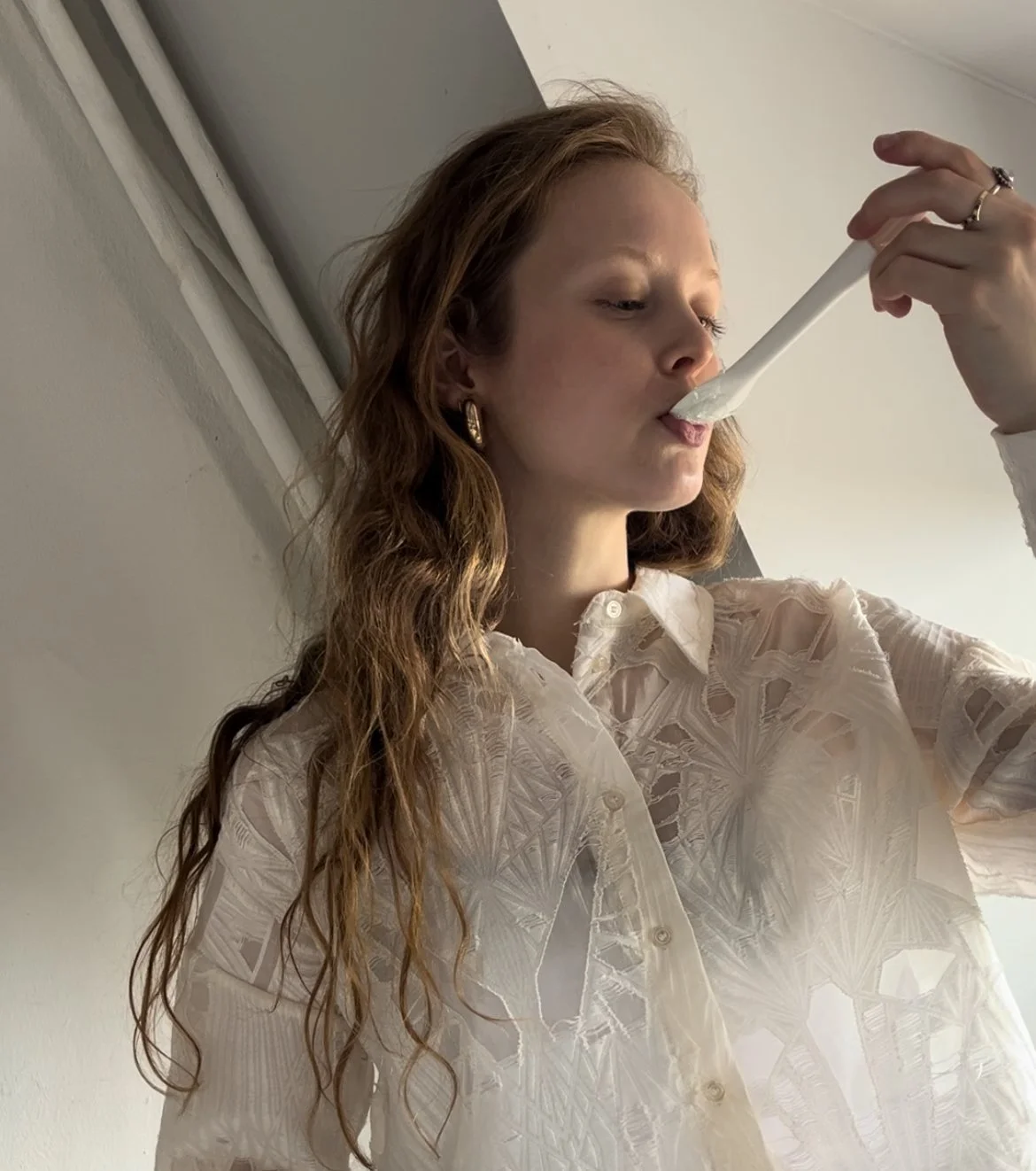
Shape testing

Concept on while presenting dessert
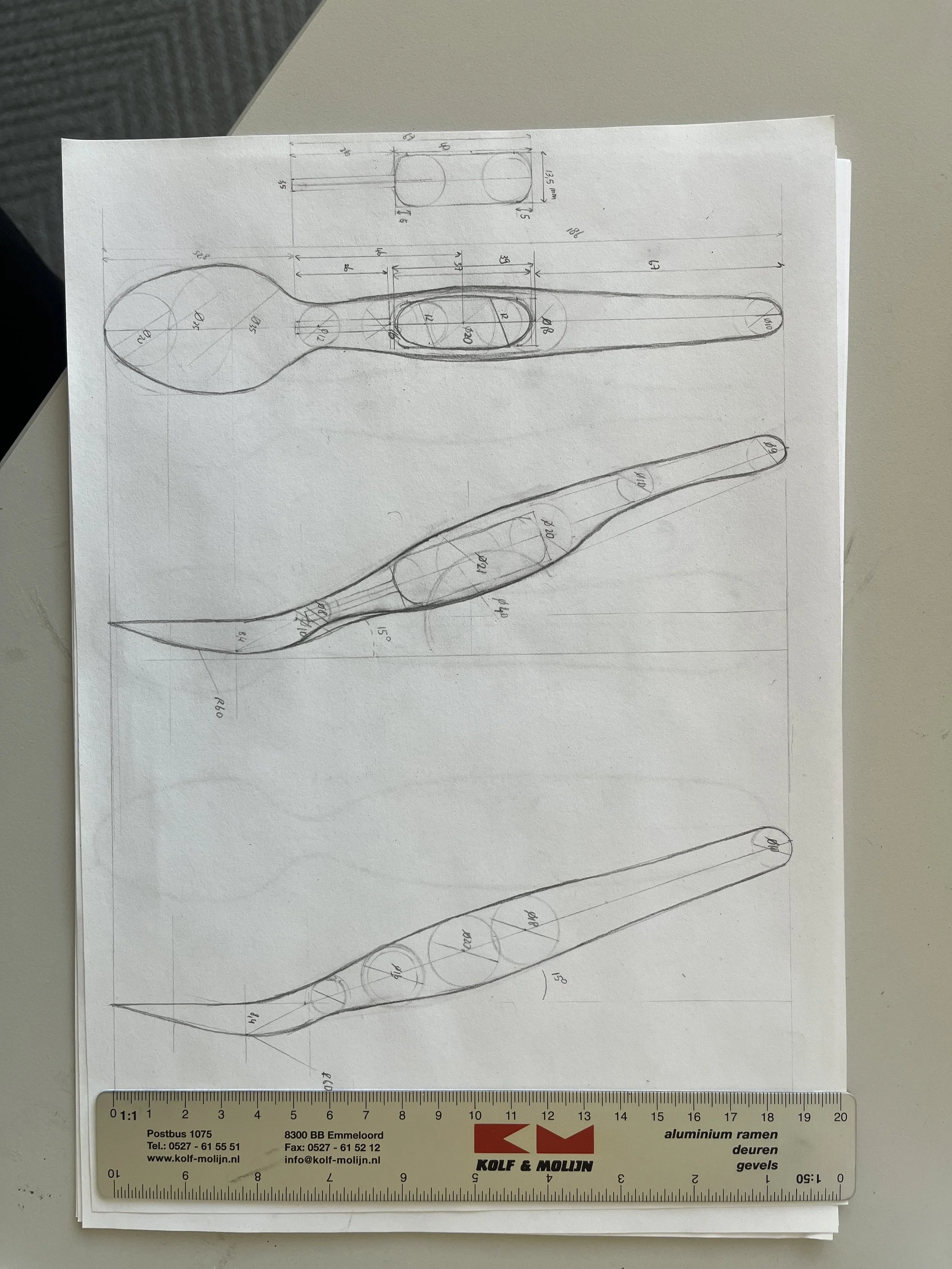
Technical drawing